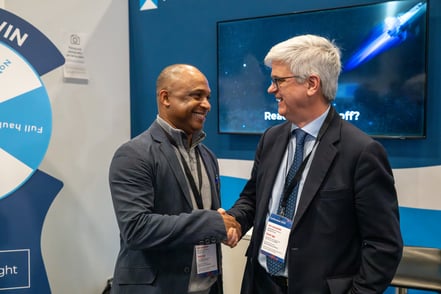
Graham Oliver, Director of Local Government at Moore Insight, shares his perspective on where councils should be focusing now.
LGR is coming. The preparation window is shorter than it looks.
Local Government Reorganisation is now less than two years away for many authorities, and in some areas such as Surrey, the timeline is already tighter.
Decisions have already been made across Essex, Norfolk, Suffolk, and Hampshire, with others expected shortly. In most cases, this leaves no more than 20 months to stand up entirely new authorities.
On paper, that may feel manageable.
In practice, it is not.
The risk is not delivering the change itself. It is arriving at vesting day with unresolved issues that should have been addressed much earlier.
You do not need to wait
A common assumption is that planning must wait until final structures are confirmed.
It should not.
While configurations will vary, some patterns are already clear:
- Most county areas will be split into multiple unitaries
- Some district councils may be divided across new authorities
- Complexity is likely to increase, not reduce
This means a significant amount of preparation can begin now.
The organisations that use this time well reduce risk later. Those that wait carry avoidable complexity into day one.
Start with the balance sheet – “clear the loft before you move”
LGR will require the merging of multiple balance sheets under IFRS 3 (Business Combinations). The mechanics of consolidation are well understood.
The more important question is:
Is your balance sheet ready to be merged?
A useful way to think about this is moving house.
You would not pack everything from the loft and garage and take it with you without checking what is actually there. You would clear out what is no longer needed, organise what remains, and make sure everything has a place.
The same applies here.
Most authorities have strong control over long-term assets, liabilities, and reserves. Audit and financial planning processes demand it.
The challenge often sits within working capital.
This is where balances can remain unresolved or insufficiently evidenced, including:
- Aged accruals
- Legacy debtor and creditor positions
- Balances from feeder systems with limited documentation
When organisations merge, these issues do not disappear. They carry forward into the new authority.
A balance sheet that is ready for consolidation should provide:
- Clear ownership for every material balance
- A defined source of value, whether invoice, contract, accrual, or system-generated
- Up-to-date working papers that support audit and review
This is not just a technical requirement. It directly affects audit readiness, reporting integrity, and confidence in financial positions at the point of transition.
If that clarity is not in place today, this is the time to start addressing it - to ensure you are not bringing avoidable issues with you on day one.
Business processes: avoid inheriting inconsistency
New organisations cannot operate effectively on a patchwork of inherited processes.
Yet this is a common outcome when process design is left too late.
LGR creates an opportunity to establish:
- Consistent ways of working
- Clear governance and decision points
- More efficient use of existing systems
The starting point is understanding what exists today.
Across finance and wider services such as planning, environmental health, HR, and procurement, consider:
- Are processes documented?
- Are they up to date?
- Do they reflect how work is actually carried out?
Without this baseline, it becomes difficult to identify:
- Gaps in control
- Manual or duplicated activity
- Where best practice already exists
The result is avoidable rework and reduced control during transition.
Systems and integrations: understand the full picture before day one
In most councils, the finance system sits at the centre of a complex integration landscape.
A typical authority may already have 30 to 50 integrations.
Under LGR, a new authority could inherit significantly more, potentially over 200 integrations across merging organisations.
To return to the earlier analogy, this is not just moving the contents of one house, it is combining multiple households, each with their own systems, connections, and ways of working.
The immediate challenge is not rationalisation.
It is operational continuity.
Authorities should be able to answer:
- What integrations exist today?
- What data flows between systems?
- Which processes depend on them?
Without this visibility, risks emerge quickly:
- Reporting becomes inconsistent
- Transactional processes fail or require manual workarounds
- Decision-making slows due to lack of confidence in data
This is often where early instability appears.
This is about control, not activity
LGR programmes will generate significant activity over the next two years.
But activity is not the same as control.
The organisations that navigate this successfully focus early on:
- Data clarity and ownership
- Process consistency
- Integration visibility
- Defined governance and accountability
These are not transformation initiatives in themselves.
They are the conditions that allow transformation to succeed.
A practical perspective
Across similar programmes, the pattern is consistent.
Where early groundwork is in place:
- Transition risk is reduced
- Day one operations are more stable
- Leadership can make decisions with confidence
Where it is not:
- Issues surface late
- Programmes become reactive
- Senior attention is diverted to avoidable problems
A simple question to consider
If vesting day were six months away rather than eighteen:
What would you wish you had already resolved?
In most cases, the answer points to:
- Balance sheet clarity
- Process documentation
- Integration visibility
These are the areas where early action has the greatest impact.
Where to start
If you are assessing readiness for LGR, the most useful starting point is not a full transformation plan.
It is a clear, evidence-based view of:
- Balance sheet integrity
- Process maturity and consistency
- Systems and integration visibility
This is not about selecting systems or solutions at this stage. It is about creating the conditions for those decisions to be made well later.
If you would value an independent view of your current readiness, you can contact Graham Oliver, Director of Local Government, at:
graham.oliver@moore-insight.com
OR
Connect with Graham on LinkedIn.
Graham and the team focus on helping councils identify where risk is most likely to surface, and what to prioritise now to avoid complexity later.
.png?width=1080&height=800&name=Copy%20of%20logo%20scroller%20images%20(11).png)

.png?width=180&height=66&name=logo%20scroller%20images%20(9).png)

.png?width=220&height=80&name=logo%20scroller%20images%20(9).png)